Woman Of The Sea
“Haenyeo”
When life gives you Tangerine, Tamra the Island, Hometown Cha Cha, The Last of the Sea Women,, Swallow the Sun and many more. Do you know one common thing about all these movies and dramas? Jeju? Jeju’s famous oranges ? Scenery ? Sea? When we talk about Jeju Island, we get all these things in our mind, right? But there is one more - Haenyeo! (Jeju Tradition).
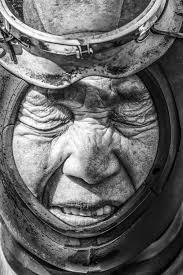
Haenyeo (해녀) - Sea Woman, Hae (해) = Sea & Nyeo (녀/여) = Woman.
Source: https://www.josejeuland.com/haenyeo-jeju-island-south-korea/
In Jeju Island, women dive into the sea without breathing equipment to collect seafood and marine plants. It's a famous and unique coastal tradition there. In 2016, UNESCO officially recognized the culture of jeju - Haenyeo in the Intangible Cultural Heritage of Humanity.
History
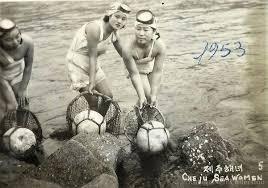
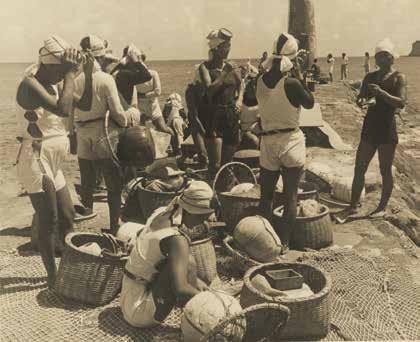
Haenyeo is a dangerous and tiring path with a long and rich history, originating around the 16th century. When families had to pay the heavy taxes to the Korean rulers, additionally men often went to war, leaving women solely to support their families. As a result women became the primary breadwinner and laborer of their household. They started seafood harvesting (seaweed, abalone, conch, sea urchins, sea cucumbers, sea squirts, octopus, and various seaweeds such as hijiki and sargassum).
Left: https://www.koreatimes.co.kr/opinion/20220115/the-haenyeo-views-of-jeju-from-the-past-part-3
This follows the strict hierarchy from mothers to daughters, experienced divers train younger generations starting age around 11-12. Knowledge is passed down to younger generations in families, fishery cooperatives and schools as well. The government has opened the Haenyeo School and Museum to promote this unique culture of Jeju, South Korea.
Sanggun, Junggun, Hagun
Divers are categorised into 3 groups according to their experience and skills.
Sanggun - The most experienced and talented female divers known as Sanggun. They are responsible for guidance and leading the beginners and less experienced divers. They have very deep knowledge and understanding of the Marine. Sanggun can hold their breath for 2 min or more and dive into 15-20 meters of the ocean.
Junggun - Junggun takes the second/middle place. They are in a transitional stage from Hagun to Sanggun, with the experience of several years. Junggun usually dives around 10–15 meters, less than Sanggun.
Junggun also takes part in traditional shamanistic sea rituals, supporting Sanggun and guiding younger divers during these cultural ceremonies.
Hagun - They are the beginners, younger females who have just started learning. Dive under the water not more than 5-7 meters and can hold their breath for 3-0-40 seconds. Stay near to the shore, diving in shallow waters where the risk is lower.
The highest-ranking and most respected divers are known as Daesanggun. In the Haeyeon community, Daesangggun is an esteemed position, women with exceptional skills and knowledge lead the group. They make key decisions, predict weather, lead rituals, and ensure the community’s traditions and safety are maintained. Daesanggun are leaders of leaders.
Haenyeo Techniques
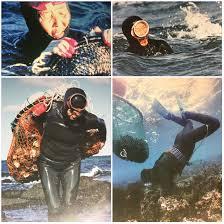
For centuries, divers have practiced a unique form of freediving which does not just help them to harvest seafood, it's their survival kit in the ocean.
Source: https://ethnoscopes.blogspot.com/2017/06/
First and most important is muljil, the act of holding the breath underwater without oxygen tanks. Sanggun can stay submerged for one to two minutes at a time, some even longer, years of practice make their lungs and bodies to withstand the pressure in low oxygen.
They release a sharp whistling exhalation called sumbisori, a unique sound well known by all the haenyeo. This whistle is a signal to fellow divers about their safety and also helps them to restore the
breathing rhythm.
There are some important tools used by haenyeo while diving like a sharp iron hook, known as bitchang, which helps in prying shellfish from rocks. A net bag or mangsu used for storing their catches.
Taewak, a small buoy that is used as a flotation device to help the haenyeo stay afloat in the sea. If you see a bright orange buoy floating in the ocean, it means that a haenyeo is at work
as it marks their location also.
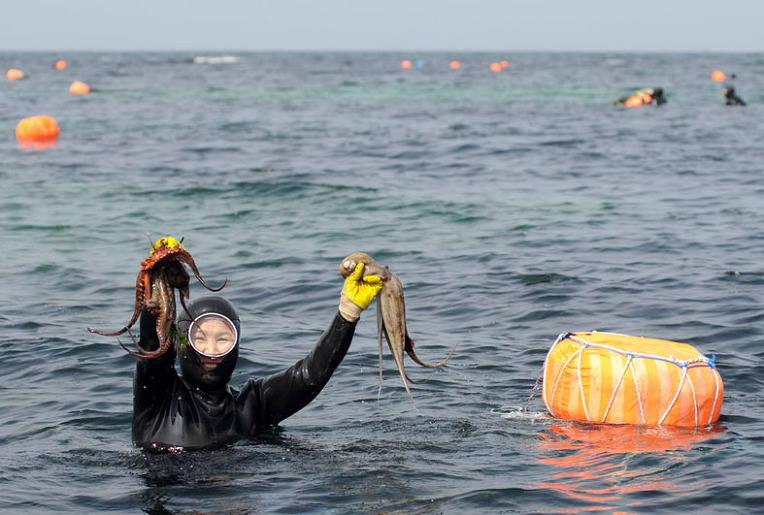
Source: https://edgeeffects.net/haenyeo/
Haenyeo takes only mature shellfish. They usually rotate their fishing grounds and avoid overharvesting, ensuring the ocean remains abundant for the upcoming generation.
Shaman Link
In South Korea, a shaman is a tribal healer and a medium between the human and the spirit world.
Haenyeo believes that the sea is alive, they believe in taking the sea’s permission first not just for good harvesting but for their safety also.
Before diving, divers often gather for the rituals led by shamans. In these rituals, offerings were made to the Dragon King of the Sea and other ocean deities, asking for calm waters, good harvests, and protection from accidents.
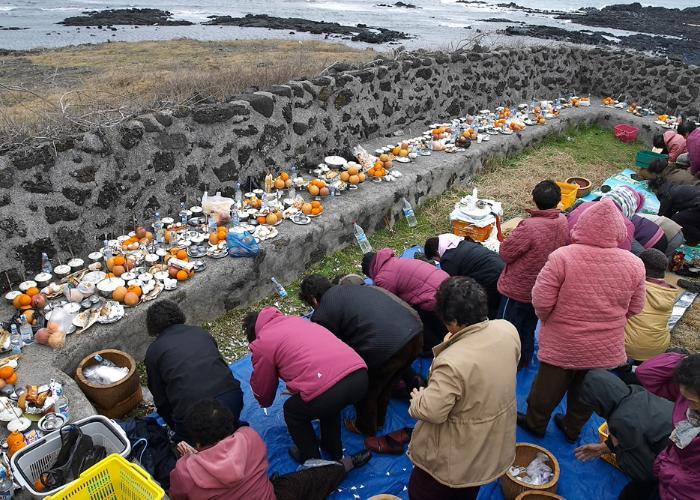
Source: https://ich.unesco.org/en/RL/culture-of-jeju-haenyeo-women-divers-01068
In the month of February, they honor Yeongdeung God. It’s a belief that Yeongdeung God visits Jeju Island on the first day of the second lunar month, protects haenyeo and gives abundant fish, seawood, abalone and other seafood to haenyeos and returns on the 15th of the same month.
Disappearing of the tradition
In recent years, haenyeo, defined as the island’s spirit, is slowly fading. Today majorly hanyeos are women in their 60 - 80s. Only a few young women choose to be divers to keep the heritage alive. Undoubtedly, diving is a tiring , exhausting and a dangerous job. Women want to pursue their education and build a life in the city .
The sea itself has also changed. Due to increasing industrialization, pollution, warming waters, and declining marine life have made it harder to harvest the seafood. Even with the haenyeo’s eco-friendly methods, the ocean cannot provide as it once did.
To help preserve the culture of haenyeo, the Jeju government pays for wet suits, subsidizes medical and accident insurance.
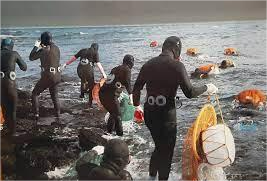
Source: https://ich.unesco.org/en/10b-representative-list-00891?include=slideshow_inc.php&id=01068
The progress of society is fading the tradition of Jeju island but it also means, now women no longer need to risk their lives at sea.
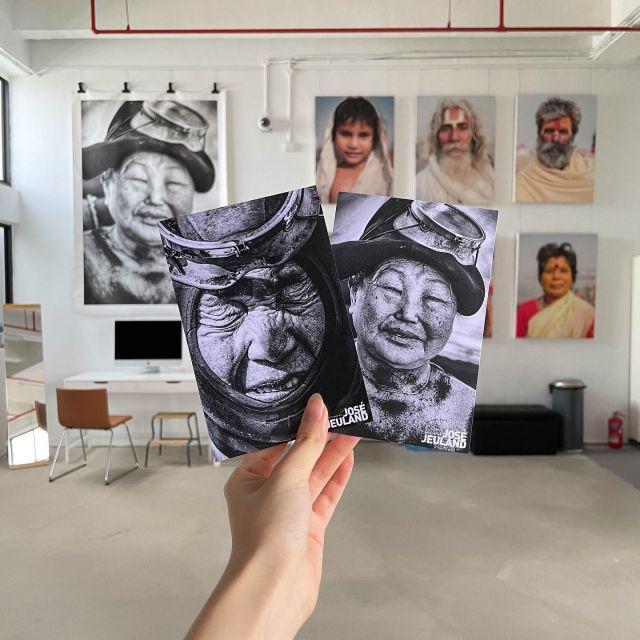


Haeneyeo is not just the pride of Jeju but for South Korea as well. From the 16th Century it shows the strength of women, who put their life in danger for sea harvesting for their family. Haenyeo represents resilience, cooperation, strength, their bond with mother nature and a way of life.